Serving Clovis, CA & nearby
(559) 338-7805
Clovis, CA

Is Your Older Clovis Garage Door Worth Fixing

Clovis homes built between 1956 and 1993 carry doors that heat and age wear differently. Here's how to tell what's worth repairing and what isn't.

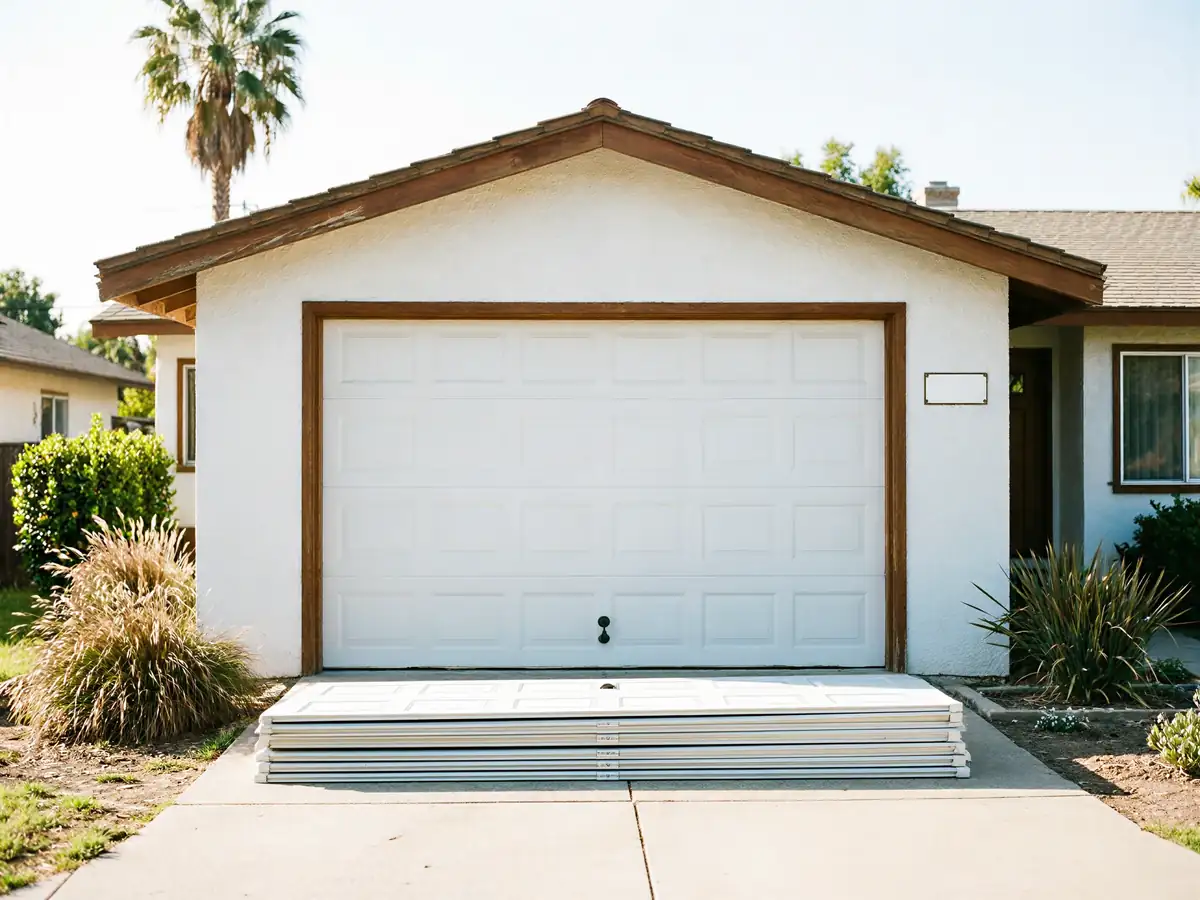
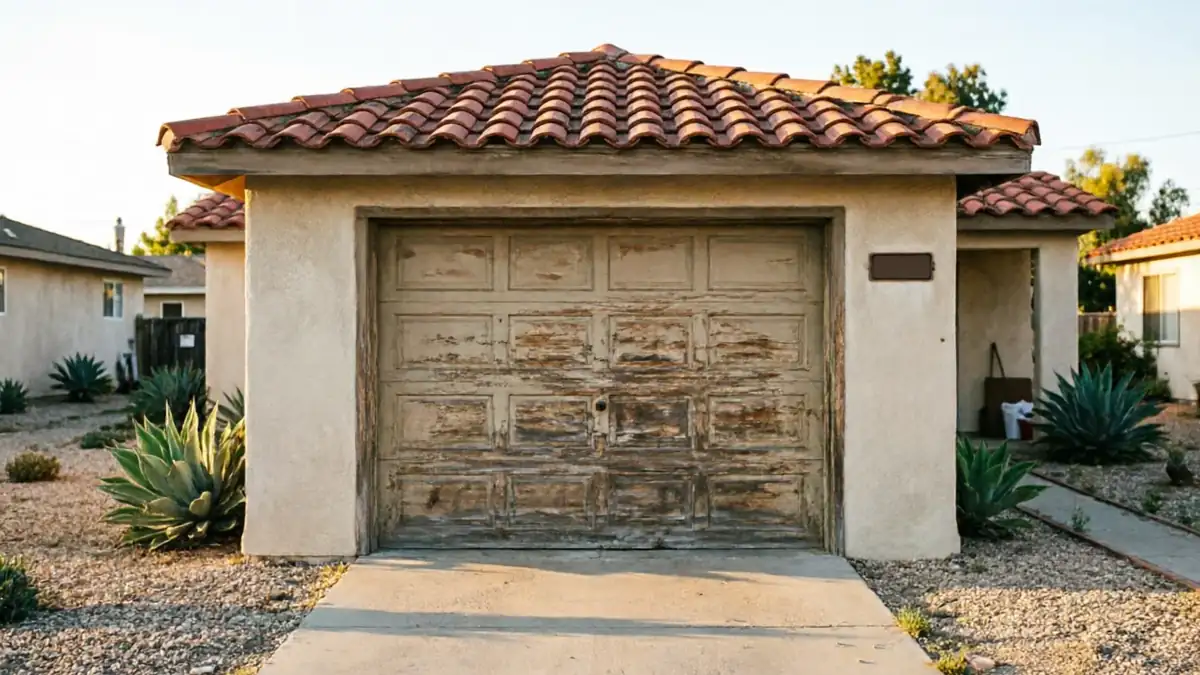
The garage door is old and peeling, with a tiled roof above.

What Local Conditions Do

Clovis sits in a severe heat climate band, and that matters more to a garage door than most owners think. Summer heat swells wood panels, dries out the lubricant in torsion springs, and softens the nylon in rollers and gear sets until they wear down faster than the manufacturer ever planned for. A door built for a mild climate somewhere else doesn't see this kind of cycling - hot days above 100, cool nights, repeated expansion and contraction on steel tracks and panel seams. Over enough summers that stress shows up as a spring that breaks years before it should, an opener gear that strips, or a panel that no longer sits flush in its track. None of this is a manufacturing defect. It's just what severe heat does to a mechanical assembly that gets used twice a day, every day, for decades.

What Is Going On

Most houses in the Clovis service area went up between 1956 and 1993, with the median landing around 1982, and the stock leans heavily 1980s-90s across the fourteen named areas we work - Sunnyside, Old Fig Garden, Rolling Hills, and the rest. A door install from that era is older than most of the openers on the market today, and it's usually the second or third opener on a door that's never been replaced. That mismatch is where the trouble starts: a modern opener bolted to a 1980s track and spring setup is only as reliable as the weakest original part. If the spring is original, it's been carrying the door's weight through forty summers of heat cycling, and that's the part most likely to fail without warning.

What You Pay

We don't have a flat number to quote here - repair cost depends on what's actually worn versus what still has life in it, and we won't state a figure we can't stand behind. What we can say is that household income across the service area runs a median of $74,428, with roughly 15,223 owner-occupied houses among 28,893 households, which tells us most of the doors we're called out to belong to people who bought the house, not a landlord patching a rental. That changes the math on repair versus replace - an owner who plans to stay generally gets more value out of fixing a sound door than swapping it early, as long as the track and frame are still square.

Checking It Yourself

Before you call anyone, look at three things. First, the springs - if you can see rust, gaps between coils, or a visible stretch on one side more than the other, that's heat-driven wear and it's worth a professional look, not a DIY fix. Second, the rollers - nylon rollers that have gone soft or cracked from years of heat exposure will make the door run rough well before they snap outright. Third, check whether the panels still sit flush at the seams; a door built in the 1980s-90s stock common to this area will often show gaps at the bottom panel first, since that's where ground heat and daily use hit hardest. If all three check out, the door is probably worth fixing. If the frame itself has shifted, that's a different conversation.
How it works

From “it’s stuck” to “it’s fixed”

1
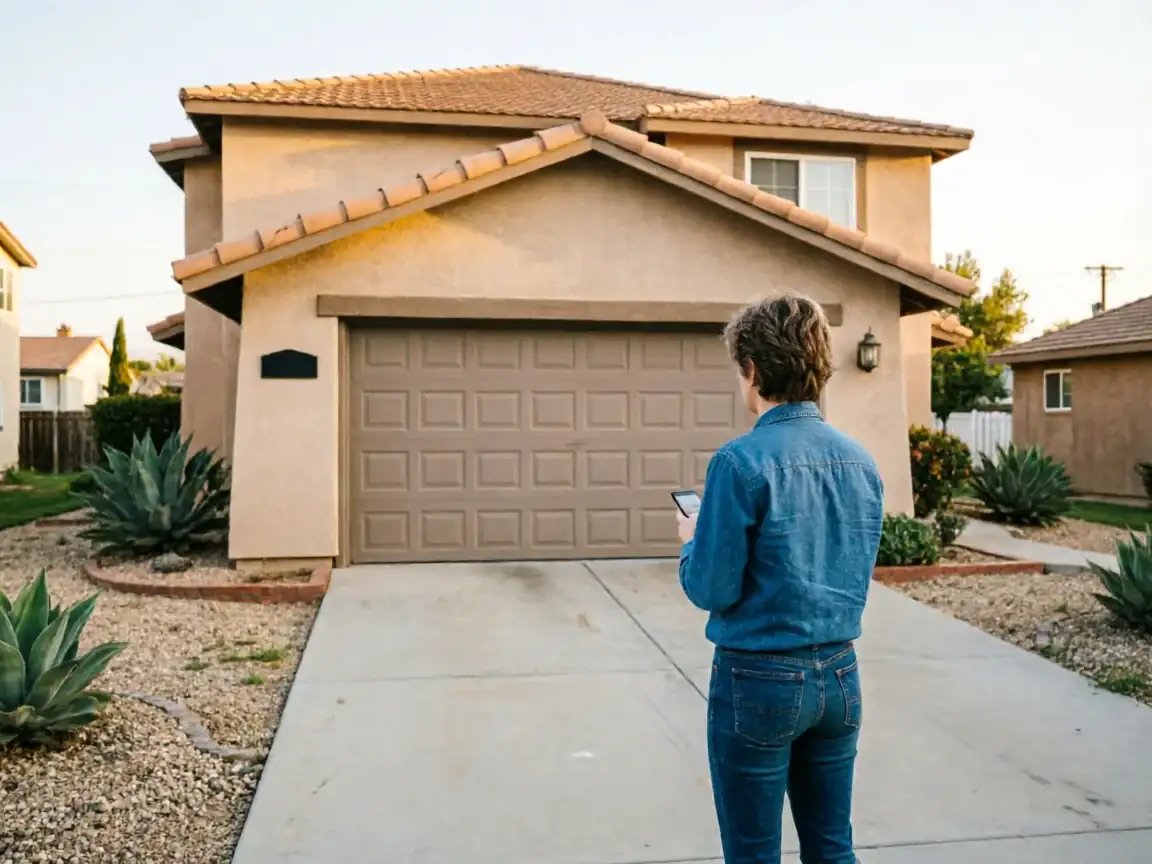
A person in a denim shirt stands in a driveway, looking at a phone.

Tell us what’s wrong

Describe the symptom - won’t open, loud bang, opener runs but the door won’t move.

2
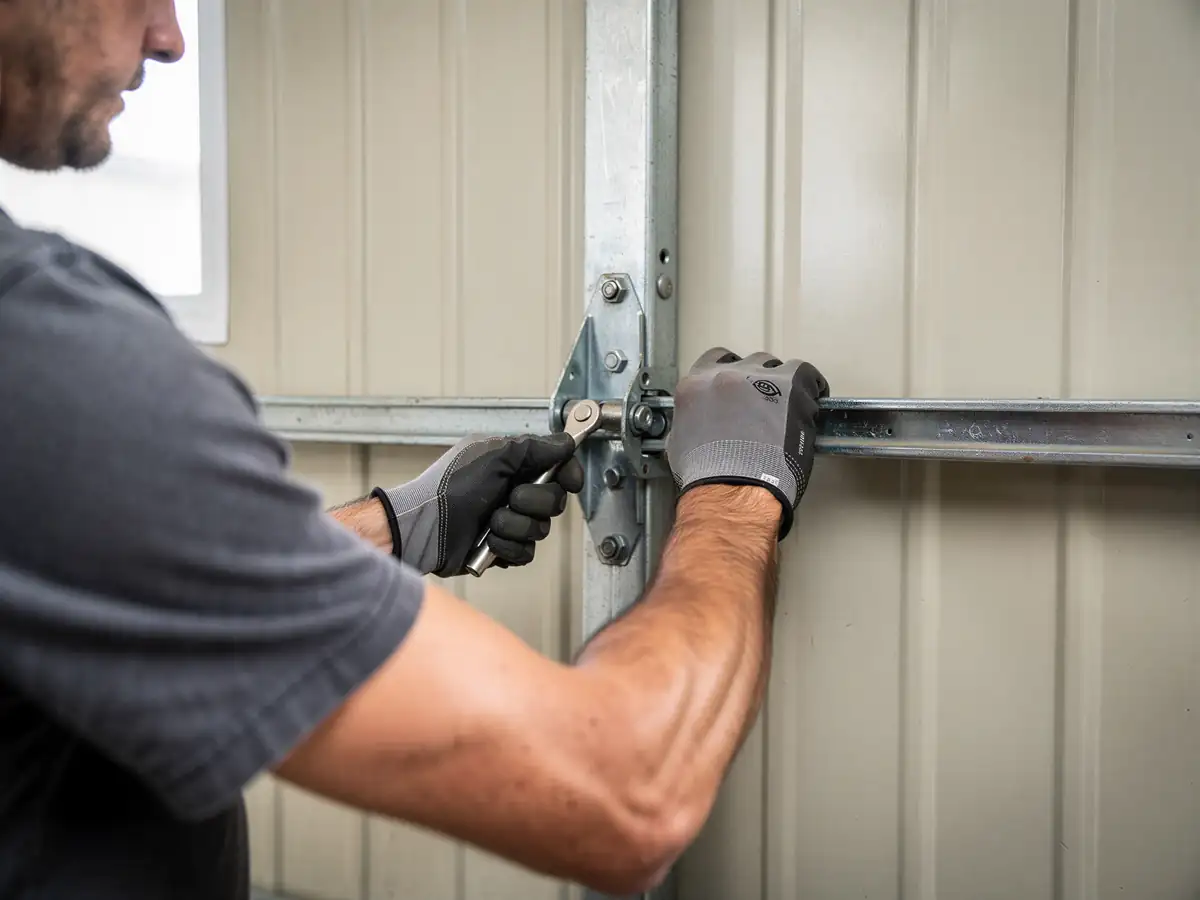
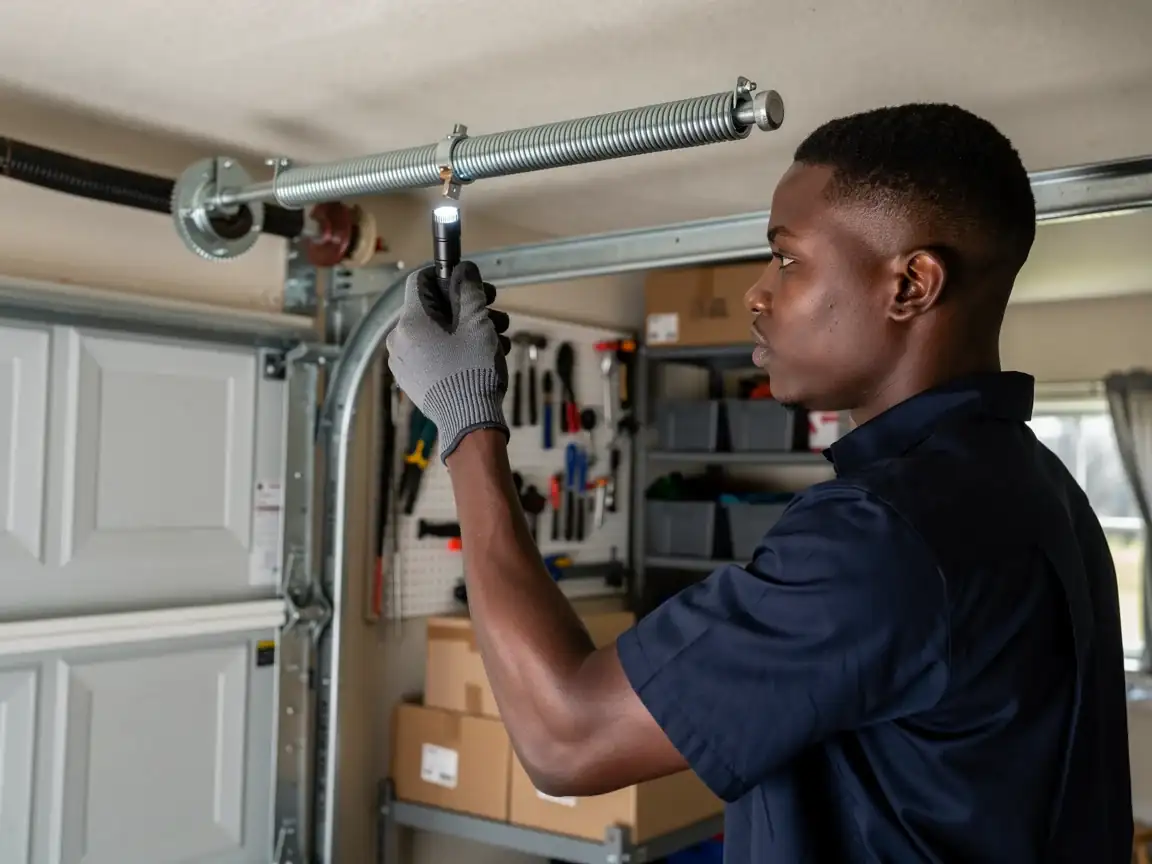
A technician in a dark blue shirt inspects a garage door torsion spring with a flashlight.

On-site diagnosis

A technician tests the door under power and by hand and finds what actually failed.

3
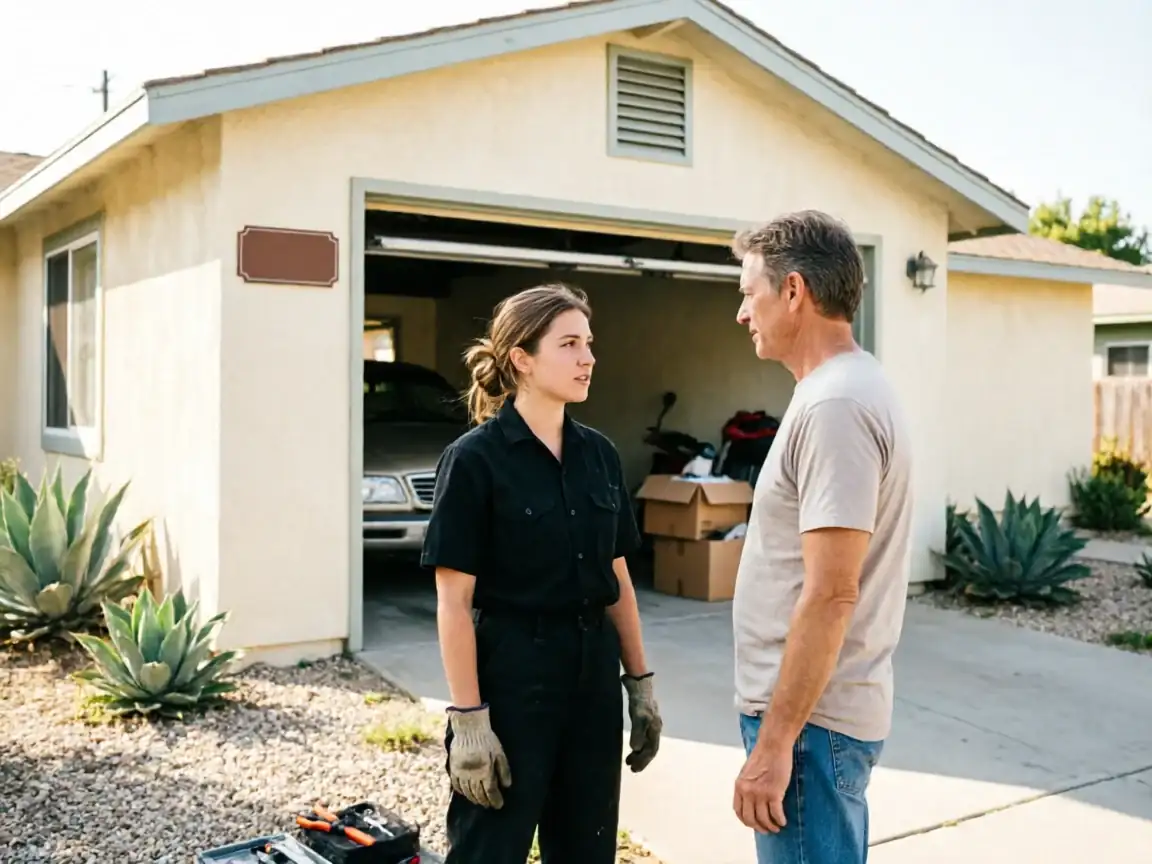
A technician talks to a man in front of an open garage.

Clear, up-front plan

You get the fix that’s needed and what drives the cost - before any work starts.

4
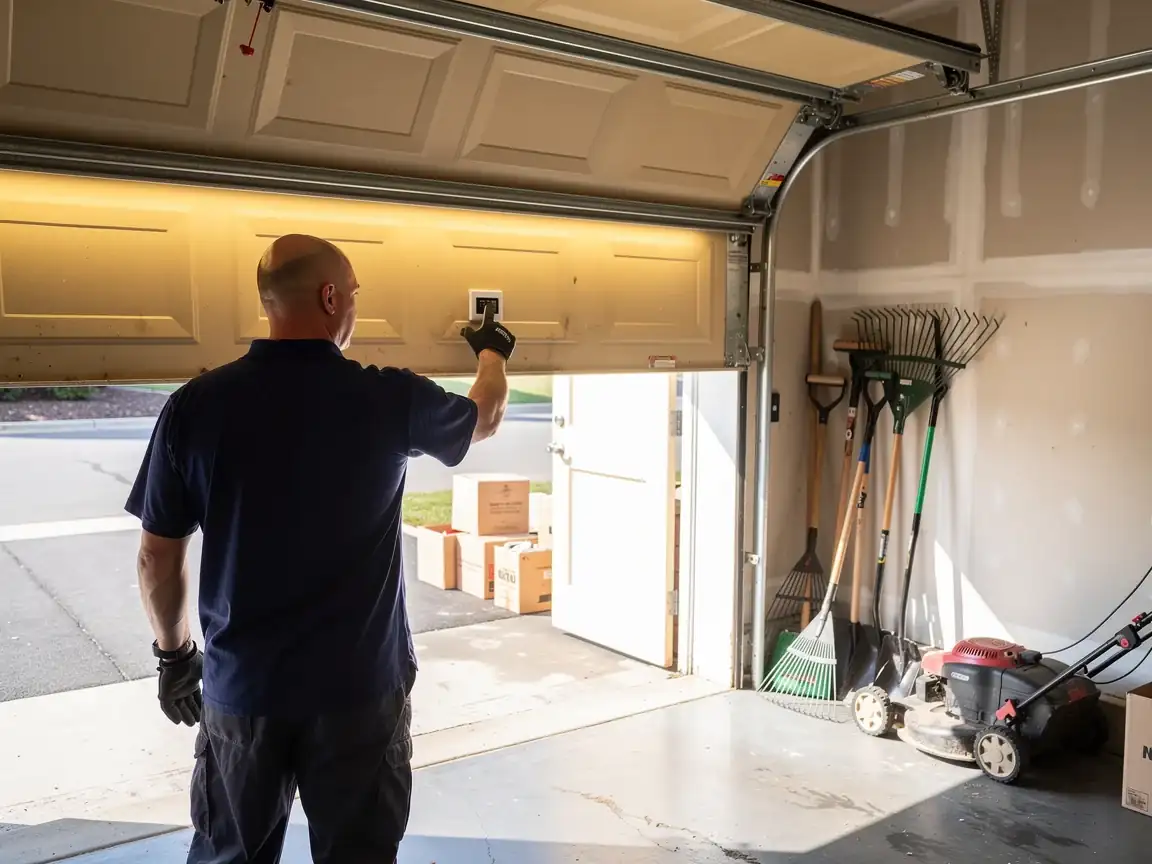
A technician in gloves adjusts a light strip on an open garage door.

Repaired & tested

The repair is done, the door is set true and tested, and the work area left clean.

Not sure which repair your door needs in Clovis, CA? Describe what it’s doing - every job starts with a diagnosis.

How we work

What to expect

Diagnosis first

Every visit starts by finding what actually failed - not a pre-written parts list.

The right part for the door

Springs and openers matched to the door’s weight and age, so the fix holds up.

Straight answers

When a repair makes more sense than a replacement - or the reverse - you hear it plainly.

Clean, careful work

Tension released safely, hardware set true, the door tested under power before we leave.

What we do

Garage Door Services

Repair and installation work for Clovis homes and businesses.

Questions

Frequently asked

Straight answers about garage door repair in Clovis. Still unsure? Ask us directly.

How do I know if my garage door spring is original to the house?

If the house was built in the stock common to this area - 1956 to 1993, median around 1982 - and nobody mentioned a spring replacement, assume it's original until proven otherwise. Look for rust, uneven coil spacing, or visible sag on one side. Original springs that have run through decades of severe summer heat are usually close to the end of their life even if they haven't broken yet.

Does the heat really wear out garage door parts faster here?

Yes. Severe heat cycles dry out spring lubrication and softens nylon rollers and gears faster than in milder climates. A door that would last fine in a cooler region often shows wear sooner here, especially on parts installed in the 1980s and 90s when plastics and lubricants weren't built for today's heat loads.

Is it ever not worth fixing an old door?

If the track or frame has shifted out of square, patching the spring or rollers won't fix the underlying problem - the door will keep binding no matter what you replace. At that point, replacement usually costs less over time than repeated repair calls on a frame that's no longer true.

Ready to get your garage door sorted?

Tell us what it’s doing and where you are in Clovis - we’ll take it from there.

Request a QuoteCall