Serving Clovis, CA & nearby
(559) 338-7805
Clovis, CA

Why Garage Doors Break Down Faster in Clovis Heat

Most Clovis homes date 1956-1993; severe summer heat wears garage door springs and panels fast. Here's what breaks first and typical repair costs in Clovis.

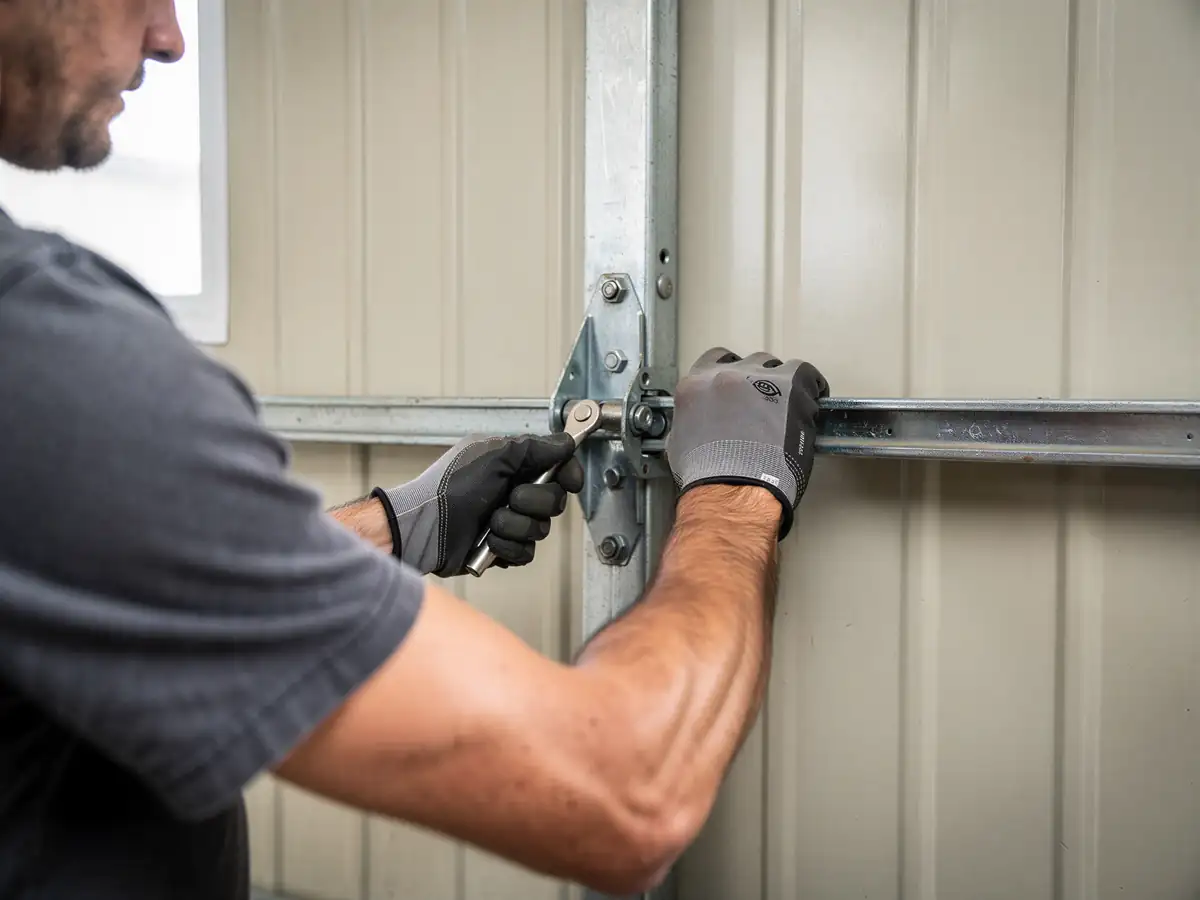
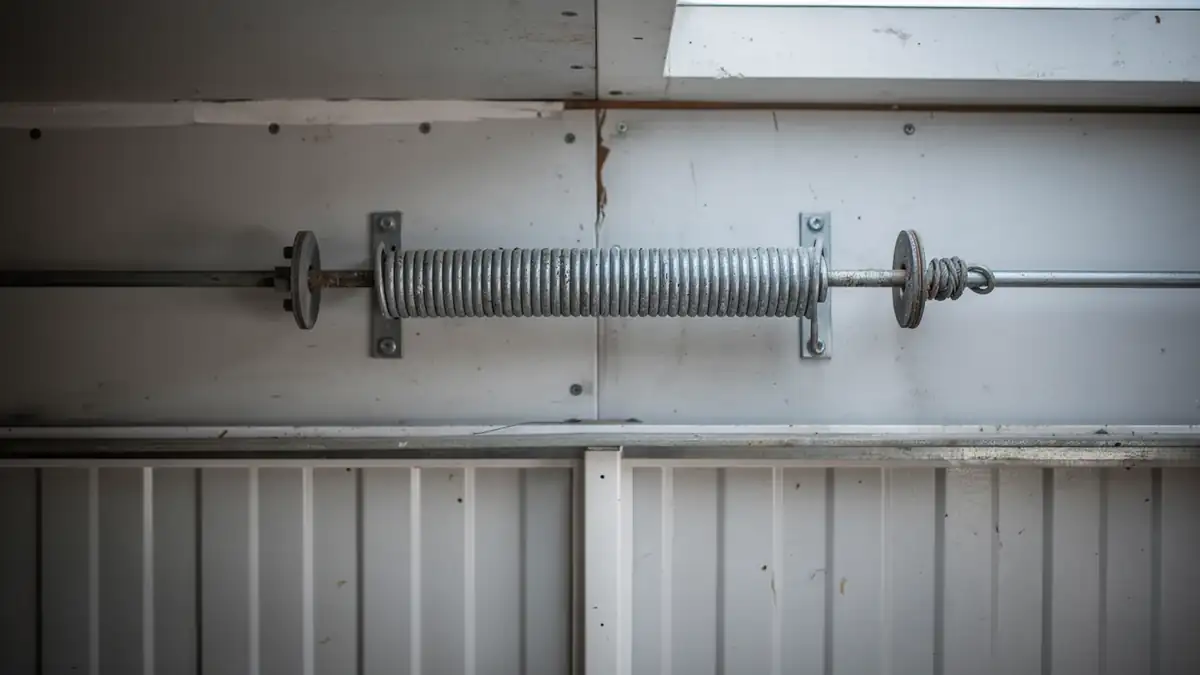
A garage door torsion spring is mounted on a white wall above a white garage door.

What Local Conditions Do

Clovis sits in a climate band the federal data flags as severe heat, and that matters more for a garage door than most people think. Steel panels expand in the afternoon sun and contract again overnight, and that daily swing works on welds, hinges, and track alignment year after year. Most houses in the service area were built between 1956 and 1993, with the median landing around 1982, so a huge share of the doors out there are original equipment or a single replacement old enough to have outlived its hardware's design life. Across the 14 named areas we work in, the bulk of the stock is 1980s-90s construction, which means similar door widths, similar track spacing, and similar spring specs showing up call after call. We cover a wide radius from Clovis itself, out to places like Sunnyside, Old Fig Garden, Rolling Hills, Friant, and as far as Sanger, Selma, and Raisin City. That spread means we see the same heat-driven failures on doors built the same decade, whether the house sits closer in or out toward Madera Ranchos or Parlier. The pattern repeats because the housing era and the climate are consistent across the whole territory, not because any one street is special.

What Is Going On

A torsion spring is wound to hold a specific amount of tension, and that tension is calibrated for the steel at a given temperature. In a severe-heat climate, the metal spends months expanding under direct sun load on a south or west-facing garage wall, then cooling fast after dark. That cycle fatigues the coil faster than it would in a mild climate, and it's a big reason springs on 1960s-80s doors around here fail without warning instead of giving a slow-stretch signal first. Openers suffer too: gear-drive units bought in the 1980s and 90s, now original to a lot of these houses, were not built with today's chain or belt materials, and the heat accelerates lubricant breakdown inside the gear housing. Tracks warp less often than springs fail, but on older steel track sections, repeated heat expansion loosens the lag bolts anchoring the track to the jamb, which shows up as a door that binds partway through its travel. None of this is dramatic the way a storm is - there's no single event to point to. It's slow wear from a climate that runs hot for a long stretch of the year, acting on hardware that in a lot of these houses has never been replaced.

What You Pay

We don't have a price list to quote here, and giving you a number without seeing the door would be a guess, not a fact. What we can tell you is what drives the cost up or down on a typical call in this area. Age matters most: a door built in the 1956-1993 window often uses spring sizes or track hardware that isn't stocked the way current parts are, so sourcing the right part can add time to the job even when the labor itself is straightforward. Whether the failure is a spring versus a full opener swap matters too - a spring is a parts-and-labor repair, an opener from the 1980s that's finally quit is usually a replacement, not a rebuild. Household income in this service area runs a median around $74,428, and across roughly 28,893 households, about 15,223 are owner-occupied houses - a lot of people here are weighing a repair against a replacement on a door that's done its job for three or four decades. The honest answer is that a repair only makes sense if the door panel and track are still sound; if the heat has warped the panel itself, replacement usually costs less over time than chasing repeated fixes.

Checking It Yourself

Before you call anyone, there are a few things worth looking at, especially on an older door. Pull the release handle with the door closed and lift it by hand - if it's noticeably heavier on one side or won't stay up on its own, the spring tension is off and you should stop there and call rather than force it. Look at the track bolts where they anchor to the wall studs; on houses from the 1960s through 80s, heat-cycled lag bolts work loose over the years and you'll sometimes see daylight or rust streaking around the bolt heads. Check the bottom panel for gaps at the weather seal - panels that have baked in direct sun for decades sometimes bow slightly, and that shows up as light coming through at the corners. One thing we won't tell you to do yourself: do not touch a wound torsion spring, even a stretched or broken one. That's the one repair on this list that puts people in the ER, and it's also the one where the parts and the winding bars have to match the door's original spec, which on a 1970s or 80s door isn't always obvious at a glance.
How it works

From “it’s stuck” to “it’s fixed”

1
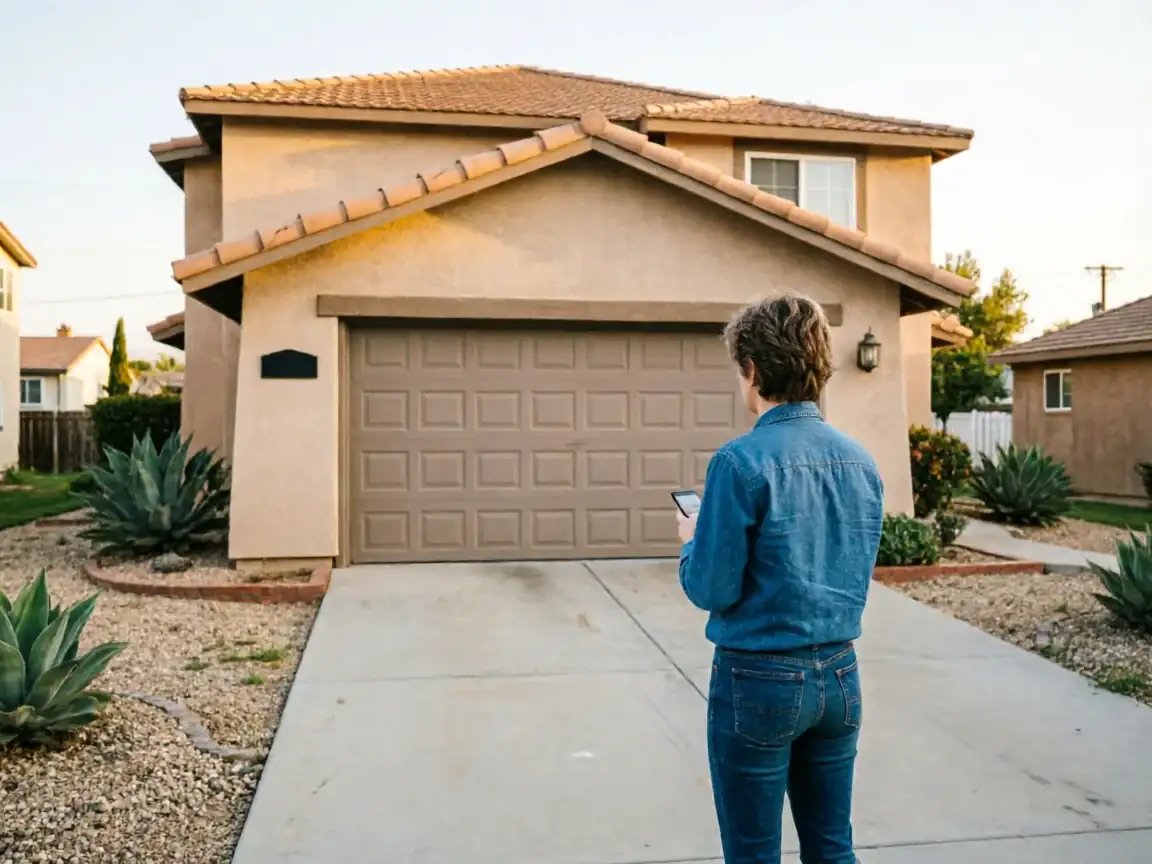
A person in a denim shirt stands in a driveway, looking at a phone.

Tell us what’s wrong

Describe the symptom - won’t open, loud bang, opener runs but the door won’t move.

2
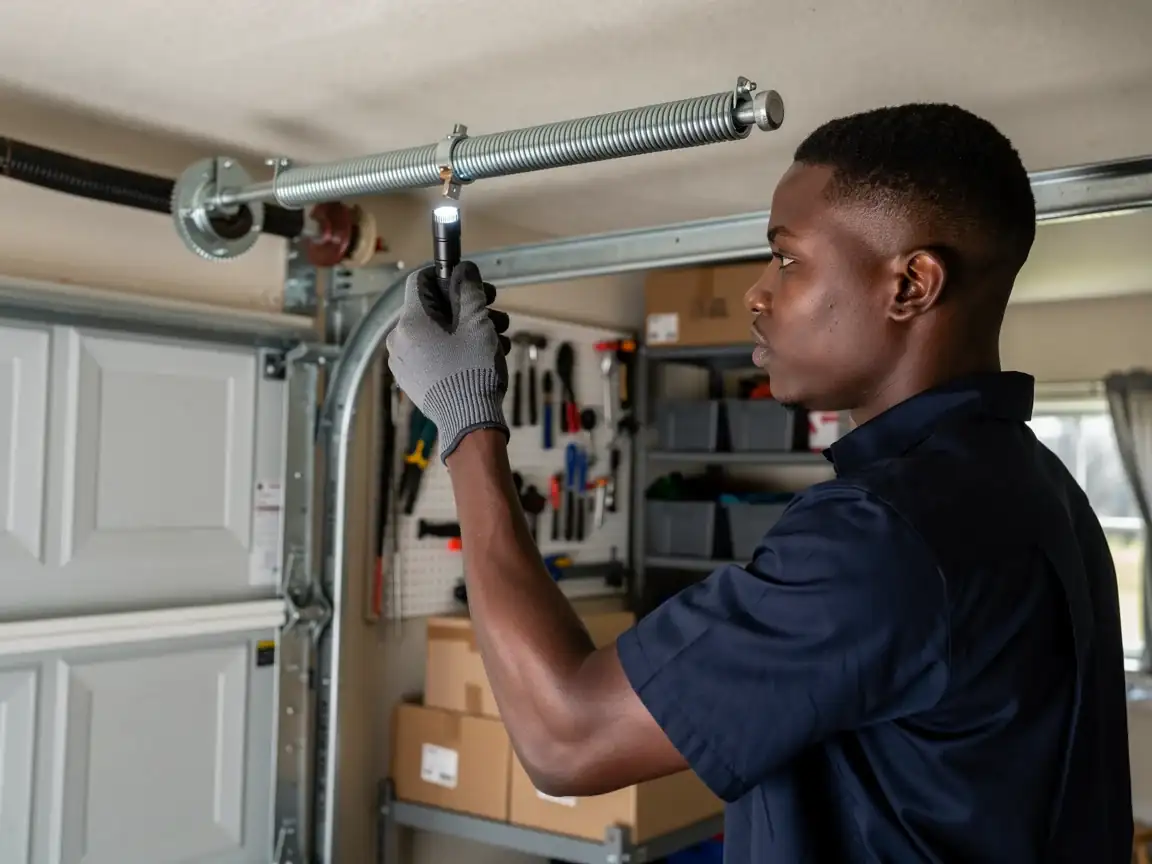
A technician in a dark blue shirt inspects a garage door torsion spring with a flashlight.

On-site diagnosis

A technician tests the door under power and by hand and finds what actually failed.

3
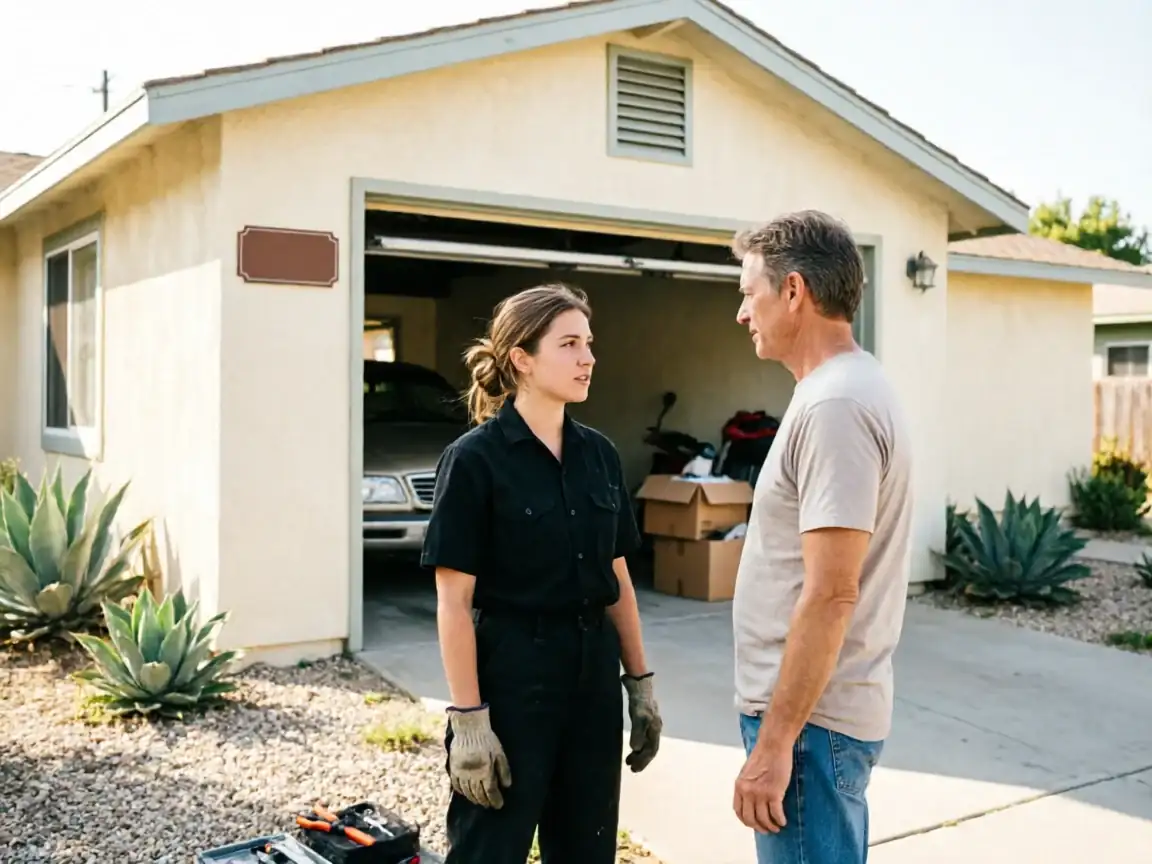
A technician talks to a man in front of an open garage.

Clear, up-front plan

You get the fix that’s needed and what drives the cost - before any work starts.

4
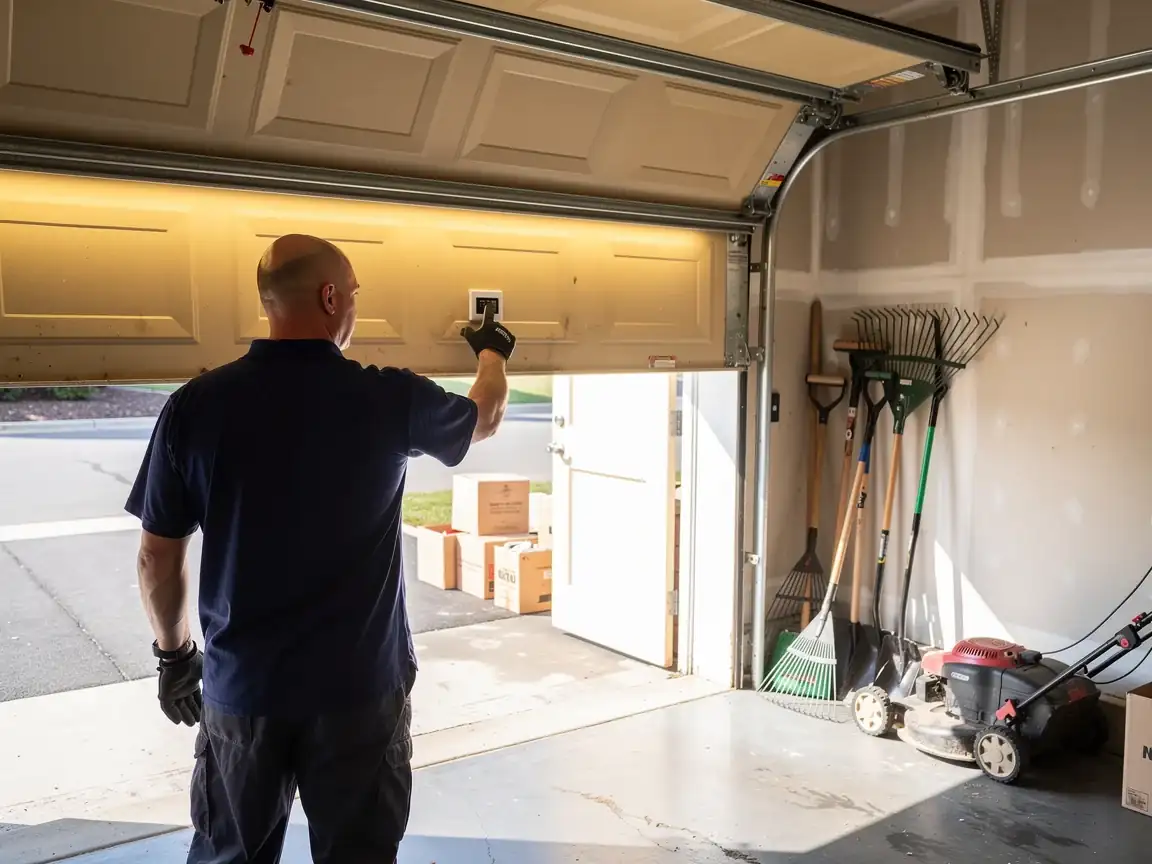
A technician in gloves adjusts a light strip on an open garage door.

Repaired & tested

The repair is done, the door is set true and tested, and the work area left clean.

Not sure which repair your door needs in Clovis, CA? Describe what it’s doing - every job starts with a diagnosis.

How we work

What to expect

Diagnosis first

Every visit starts by finding what actually failed - not a pre-written parts list.

The right part for the door

Springs and openers matched to the door’s weight and age, so the fix holds up.

Straight answers

When a repair makes more sense than a replacement - or the reverse - you hear it plainly.

Clean, careful work

Tension released safely, hardware set true, the door tested under power before we leave.

What we do

Garage Door Services

Repair and installation work for Clovis homes and businesses.

Questions

Frequently asked

Straight answers about garage door repair in Clovis. Still unsure? Ask us directly.

Why did my garage door spring snap with no warning?

On older houses in this climate, torsion springs wear from repeated heat expansion and contraction rather than from gradual stretching, which is why a 1970s or 80s spring often fails suddenly instead of giving a slow-sag warning first. The heat band here accelerates that fatigue compared to a milder climate.

Is my garage door opener too old to repair?

If it's an original gear-drive unit from the 1980s or 90s, which is common in this service area given the housing stock, the gear housing lubricant has usually broken down from years of heat cycling. At that age, replacement parts are often harder to source than a new opener, so repair isn't always the cheaper path.

Do you serve areas outside Clovis itself?

Yes, we work across the wider area including Sunnyside, Old Fig Garden, Rolling Hills, Friant, Sanger, Madera Ranchos, Del Rey, Easton, Fowler, Bonadelle Ranchos, Parlier, Selma, and Raisin City, which share a similar 1980s-90s housing stock and the same severe-heat climate pattern.

Should I repair or replace an older garage door?

It depends on whether the panel and track are still structurally sound. If heat exposure has warped the panel itself, repeated repairs usually cost more over time than replacing the door outright, especially on a door old enough that matching parts are getting harder to find.

Ready to get your garage door sorted?

Tell us what it’s doing and where you are in Clovis - we’ll take it from there.

Request a QuoteCall