Stocked Parts
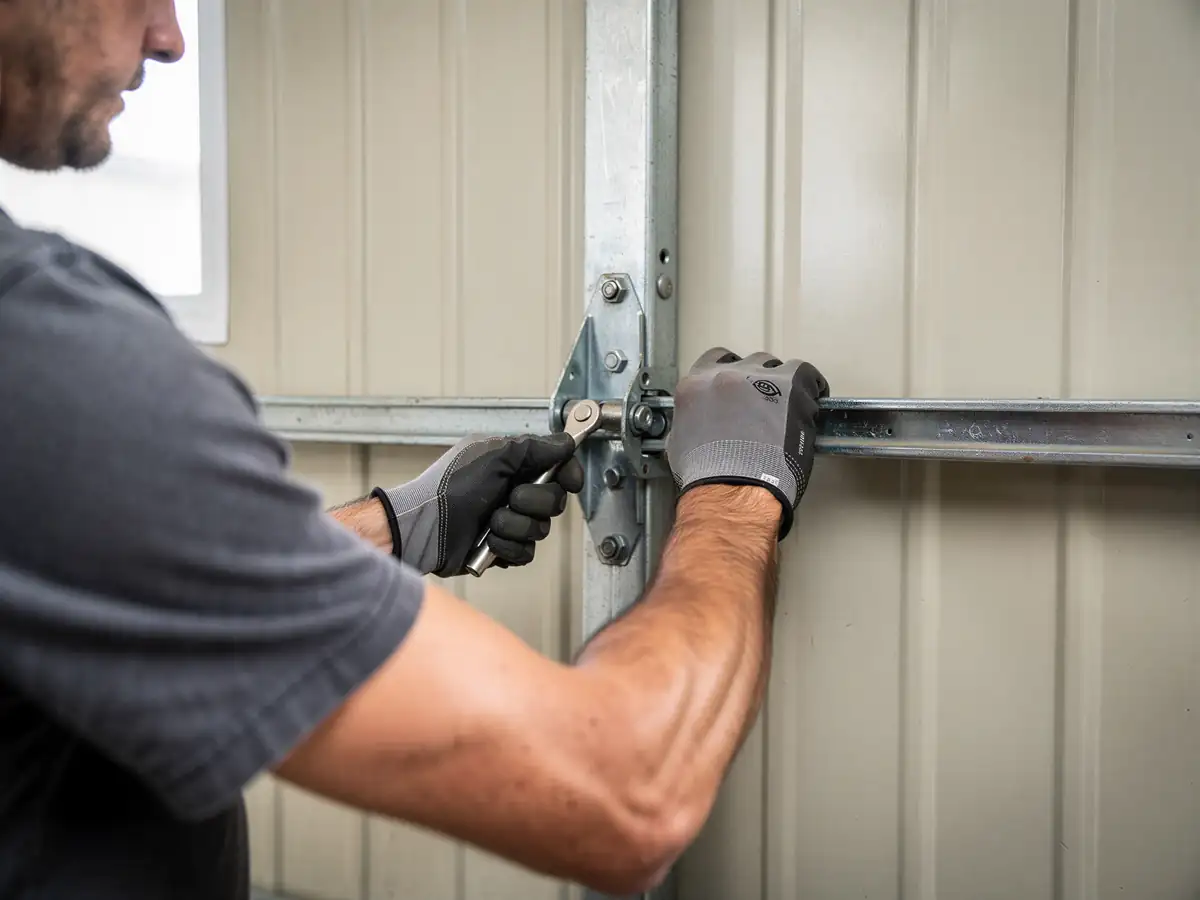
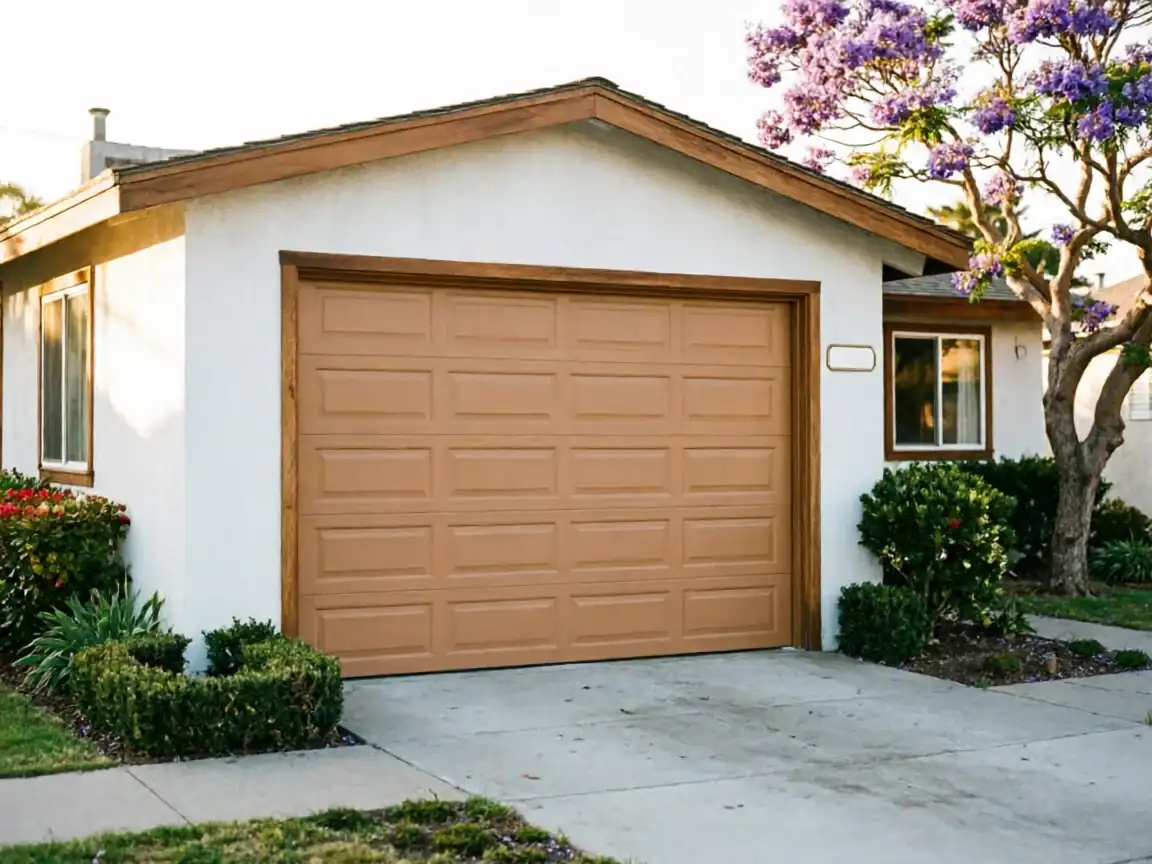
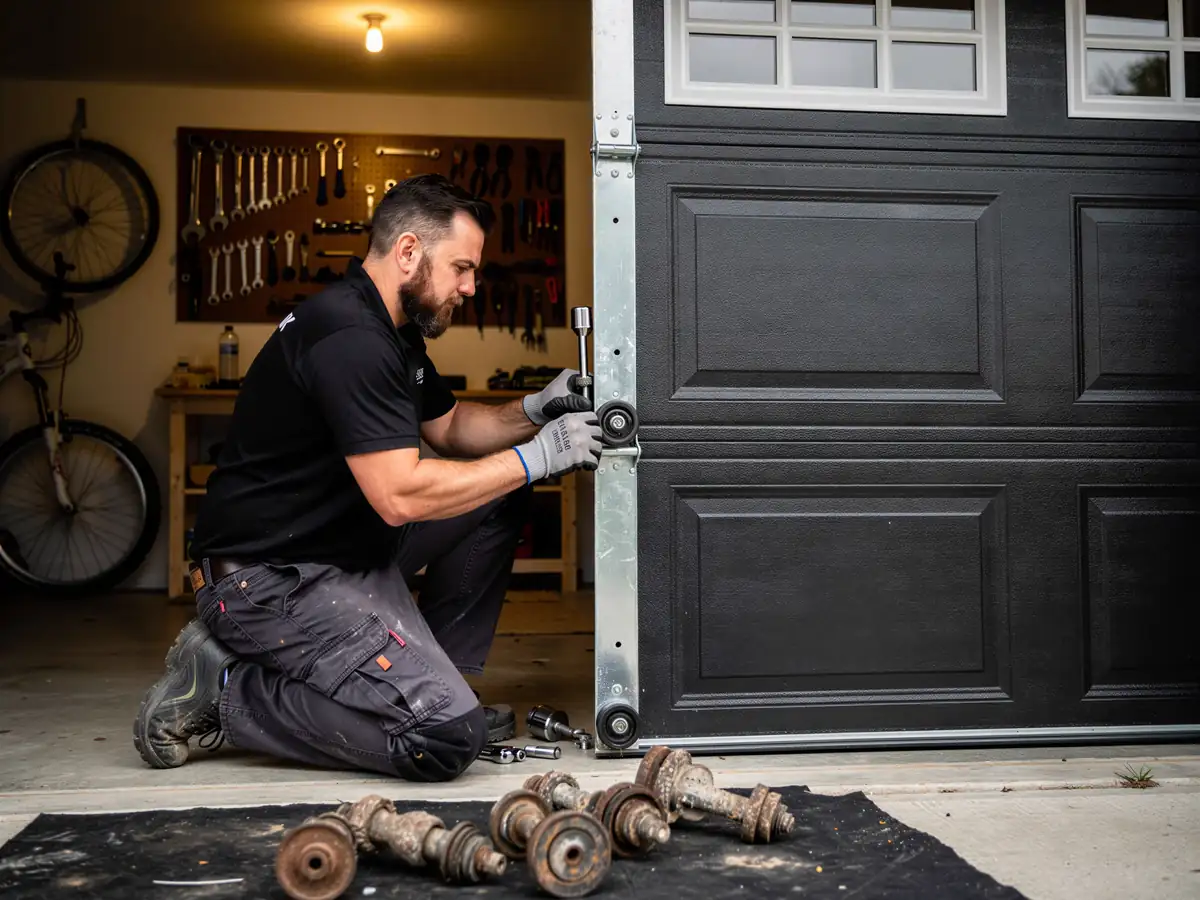
Most houses out in Madera Ranchos went up around 1985, which puts the door and track in the same era as the rest of the valley's 1980s-90s build-out. That means a steel panel, usually in the 7-foot or 16-foot double width, hung on the same stamped-steel rollers the builder spec'd thirty-some years ago. Those original rollers are steel wheels riding in a steel track with a thin bearing sleeve, and by now most of them are worn oval instead of round. We carry sealed-bearing nylon rollers on the truck out of Clovis, in the standard stem lengths that fit this generation of track, so a straight roller swap doesn't turn into a second trip waiting on parts. Nylon runs quieter and doesn't need the track lubricated as often, which matters here. We also stock the galvanized steel rollers for owners who want to match what's already on the door rather than switch materials - some do, especially on doors that are otherwise original and in good shape. What we don't stock on the truck is full track sections; if the track itself is bent badly enough that rollers alone won't fix the ride, that's a separate estimate, not a same-visit fix.
What You Are Seeing
A door riding on shot rollers in a house this age usually announces itself before it fails outright. You'll hear a grinding or popping sound as the door travels, loudest right where the roller crosses the curved section of track near the top. Some owners notice the door shuddering or jerking partway through the cycle, or see the door hang slightly crooked in the opening when it's down. On steel rollers specifically, a flat spot worn into the wheel shows up as a rhythmic thump - one knock per rotation - that gets worse the more the door is used. If a roller has actually come off its track, the door may bind hard on one side and refuse to move, or the opener will strain and reverse. None of this is urgent in the way a snapped spring is, but it is wear that gets worse, not better, and a roller that finally lets go midway through a cycle can drop a panel off the track and bend it.
What Causes It Around Here
This area sits in a severe-heat climate band, and that heat is the main thing working against roller hardware year-round. Steel expands and contracts with the daily swing between a hot garage interior and cooler night air, and that cycle loosens the roller stem in its bracket faster than it would in a milder climate. It also dries out whatever lubricant is on the track, so steel rollers run drier and wear faster between services than the manufacturer's spec assumed. Nylon rollers hold up better against this because the material doesn't transmit heat into the bearing the way steel does, which is part of why we lead with nylon on these replacements rather than matching the original steel. None of this is unique to one house - it's the same mechanism across the newer stock built through the 1980s and 90s in this part of the service area, just showing up on whichever rollers were cheapest when the house was framed.